Septic Tank Pumping in Dayton, NV
Septic pumping and drain field service for Dayton, NV. Rural Lyon County lots, dry soils, and how they shape septic care.
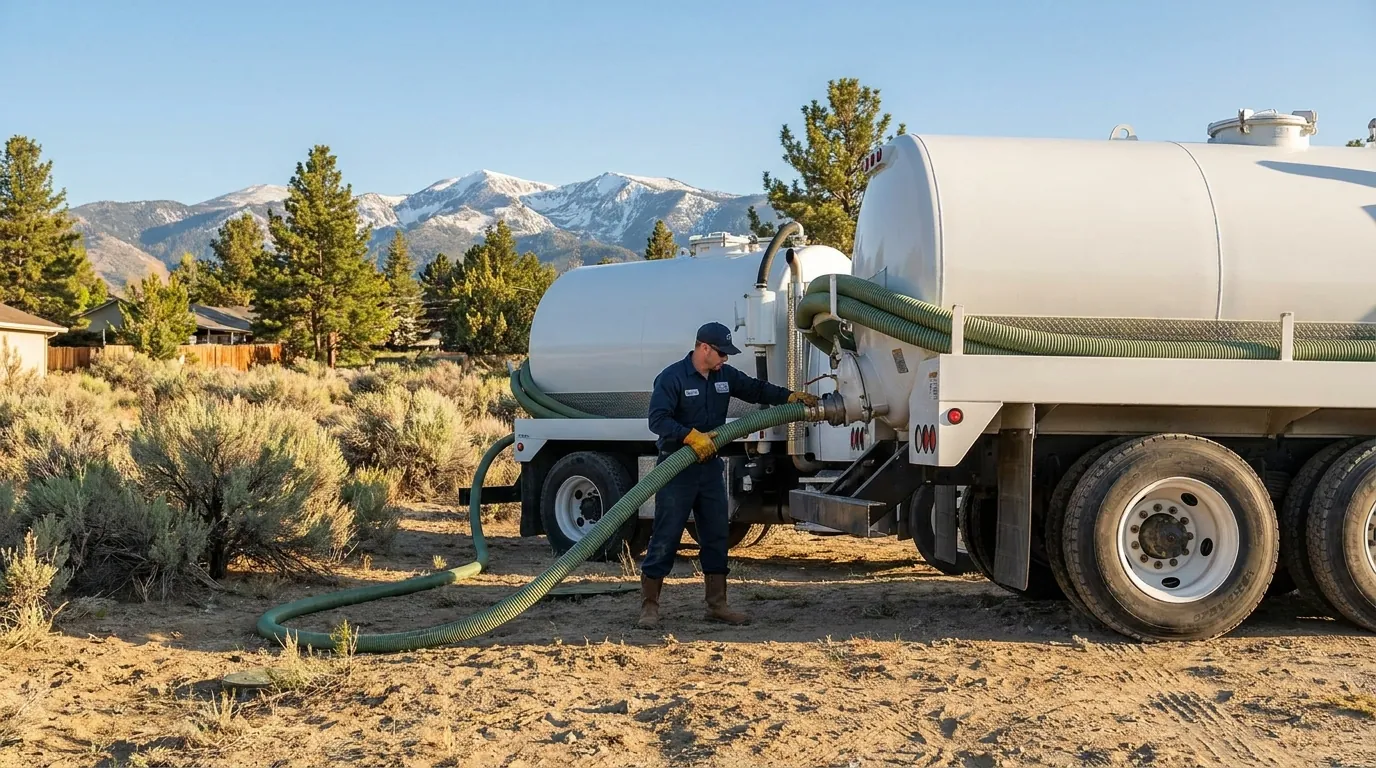
Septic service for Dayton and Lyon County lots
Dayton lies southeast of Carson City in Lyon County, strung along the Carson River where the high desert opens up into wide, dry country. It is one of Nevada's oldest settlements and has grown steadily as people seek larger lots outside the Reno–Carson corridor. Much of that growth sits on rural acreage well beyond municipal sewer, which means private septic systems are the norm rather than the exception across a lot of Dayton.
The soils here are classic high-desert — dry, alkaline, and generally free-draining away from the river bottom. That usually helps a drain field do its job, but it also means owners can go a long time without any obvious warning that a tank is filling. Sticking to a routine septic tank pumping schedule is the reliable way to keep solids out of the field, especially on properties where the system serves a well and any failure affects daily life immediately.
What Dayton's terrain means for the work
Lots along the Carson River bottom can hold more moisture and, in wet years, see the water table rise closer to drain fields, while properties up on the surrounding benches and mesas stay dry and drain quickly. We adjust the recommended pumping interval to where a home actually sits. A septic tank cleaning is worth considering when a tank has gone many years between services and sludge has compacted along the bottom.
Rural Dayton lots generally offer good truck access to the tank, and many systems are straightforward once located. We serve Dayton along with Carson City, Reno, and the wider area, so scheduling both routine and follow-up work is practical even on the outlying acreage.
Schedule septic service in Dayton
If it has been years since your last pumping or drains are running slow, reach out to arrange a visit to your Dayton property.
Serving Dayton and the greater Carson–Reno area.
Frequently asked questions
Are most Dayton homes on septic?
Many are, especially on the rural acreage that makes up much of Dayton beyond the town center. Homes on private wells and larger lots typically rely on septic tanks and drain fields rather than municipal sewer.
Does dry desert soil mean I can pump less often?
Free-draining soil helps the drain field, but solids still build up in the tank regardless of soil type. Pumping frequency depends on tank size and household use, not on how well the field drains, so a regular schedule is still important.
Does a home near the Carson River need different care?
Possibly. River-bottom lots can see higher soil moisture and a rising water table in wet years, which stresses a drain field. Those properties often benefit from more frequent inspection to catch a saturated field early.