Septic Tank Pumping in Reno, NV
Septic tank pumping service in Reno and nearby towns. Learn the warning signs, the pumping process, and how local desert soils affect pumping frequency.
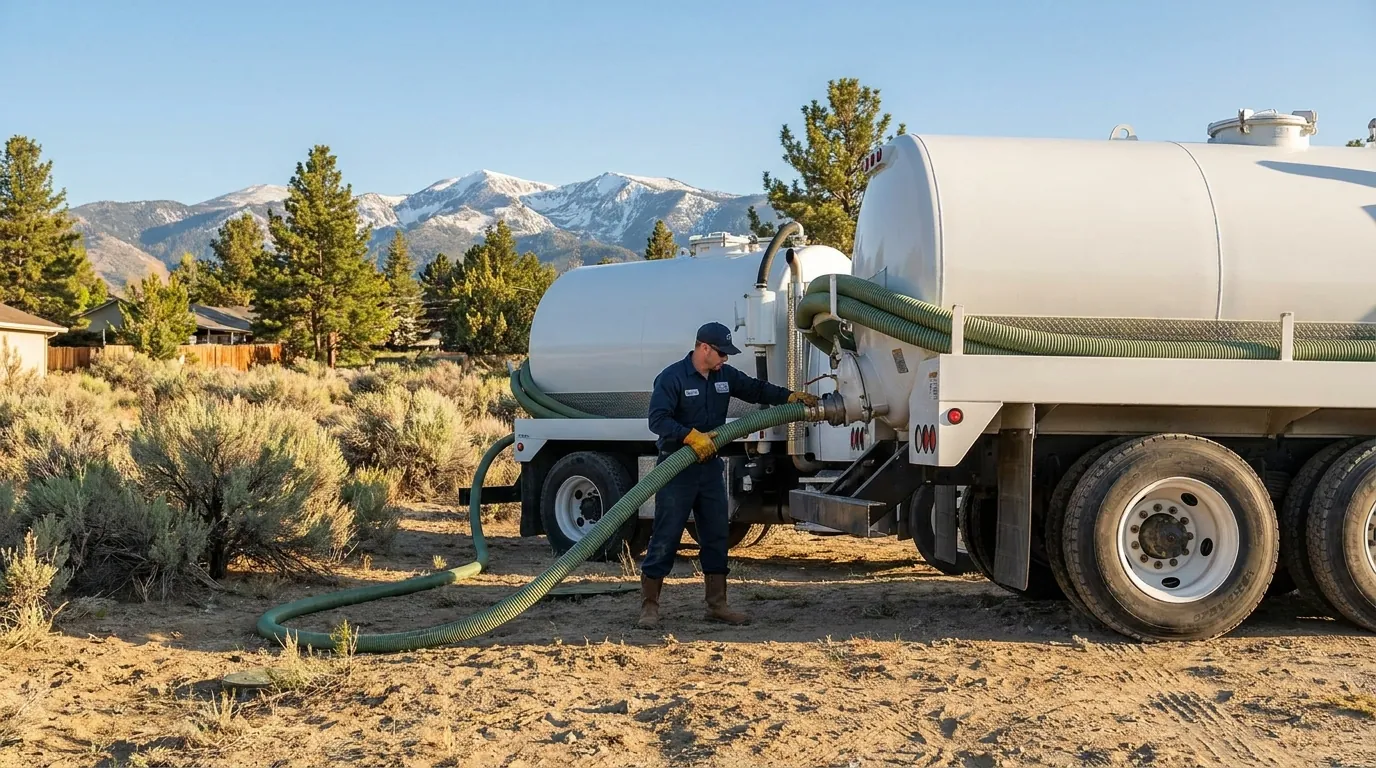
When a Reno septic tank needs pumping
Every septic tank fills with solids over time. Heavier solids settle to the bottom as sludge, grease and lighter material float to the top as scum, and the middle layer of clarified liquid flows out to the drain field. Pumping removes the sludge and scum before they build up far enough to escape the tank and clog the pipes and soil beyond it. Septic tank pumping is routine maintenance, not a repair — but skipping it long enough turns a simple service into an expensive one.
Homeowners usually notice a full tank through a handful of symptoms: drains that gurgle or empty slowly across the whole house at once, toilets that struggle even after the trap clears, a sewage smell near the tank or drain field, or unusually green, spongy grass over the buried tank. Sewage backing up into the lowest drain — often a basement or ground-floor bathroom — is the clearest and most urgent sign. If you are seeing backups, our septic emergency service can respond quickly.
In the Reno area, pumping intervals are not one-size-fits-all. Our arid heat, alkaline desert soils, and scarce rainfall change how a system behaves, and we describe that in more detail below. A septic system inspection is the best way to confirm exactly where your sludge and scum levels stand before deciding on a schedule.
What septic tank pumping involves
A straightforward pumping visit follows the same core steps at nearly every property.
-
Locate and open the tank
We find the tank and uncover the access lids or risers. In many Reno-area yards the lids sit under a few inches of soil or gravel, so locating them accurately is the first task before any pumping begins.
-
Measure sludge and scum
Before pumping, we check the depth of the sludge and scum layers. This tells us how full the tank actually was and helps set a realistic interval for your next service.
-
Pump the tank
A vacuum truck removes the liquid, sludge, and scum through the access opening. We work to draw down the heavy bottom solids, not just the easy liquid on top, so the tank is genuinely emptied.
-
Inspect the interior
With the tank empty, we look at the inlet and outlet baffles, the tank walls, and the liquid line for cracks, corrosion, or a missing effluent filter — the kinds of problems that are only visible when the tank is drained.
-
Close up and advise
We reseal the lids and let you know what we found, including any repairs worth planning and when to schedule your next pumping.
How Reno soil and climate change pumping
Septic systems depend on soil percolation and water-table depth, and those vary sharply across the Reno region. In much of the valley the soils are alkaline and often high in clay or hardpan, which drains slowly. A drain field that cannot absorb effluent quickly forces the whole system to hold liquid longer, and any solids that escape a neglected tank clog that slow-draining soil fast. Staying on a sensible pumping schedule protects the drain field, which is by far the most expensive part of the system to replace.
Reno's arid heat and scarce rainfall cut both ways. Low rainfall means the soil is usually dry and receptive, which is good for a drain field. But long dry spells followed by the occasional heavy Sierra runoff can saturate ground quickly, and a tank that is already near capacity has no buffer when that happens. Households that swing seasonally — vacation homes near Incline Village, or properties that fill up with guests — also load their tanks unevenly, which affects timing.
Because of all this, we base pumping frequency on measured sludge levels and your household's real usage rather than a generic calendar. Pairing pumping with periodic septic tank cleaning keeps the tank working the way it was designed to.
Ready to schedule septic tank pumping?
Tell us your location and roughly when the tank was last pumped, and we will help you plan a service that fits your household and your soil.
Call to schedule pumping across Reno, Sparks, and nearby communities.
Frequently asked questions
How often should a Reno septic tank be pumped?
Most households fall in a three-to-five-year range, but the right interval depends on tank size, the number of people in the home, and how well the local soil drains. The most reliable guide is measured sludge and scum levels at your last service.
What does septic tank pumping cost?
Cost is driven by tank size, how full the tank is, how easy the lids are to access, and travel distance. We give a clear estimate before starting so there are no surprises.
Can I keep using water during pumping?
It is best to limit water use on the day of service so the tank empties cleanly. Normal use resumes as soon as we finish and reseal the lids.
Do I need to find my tank first?
It helps if you know roughly where it is, but we can locate the tank and access lids ourselves. If risers are installed, future visits are faster and easier.