Septic Tank Pumping
Scheduled removal of sludge and scum from the tank before solids reach the drain field. Frequency depends on tank size, household use, and local soil.
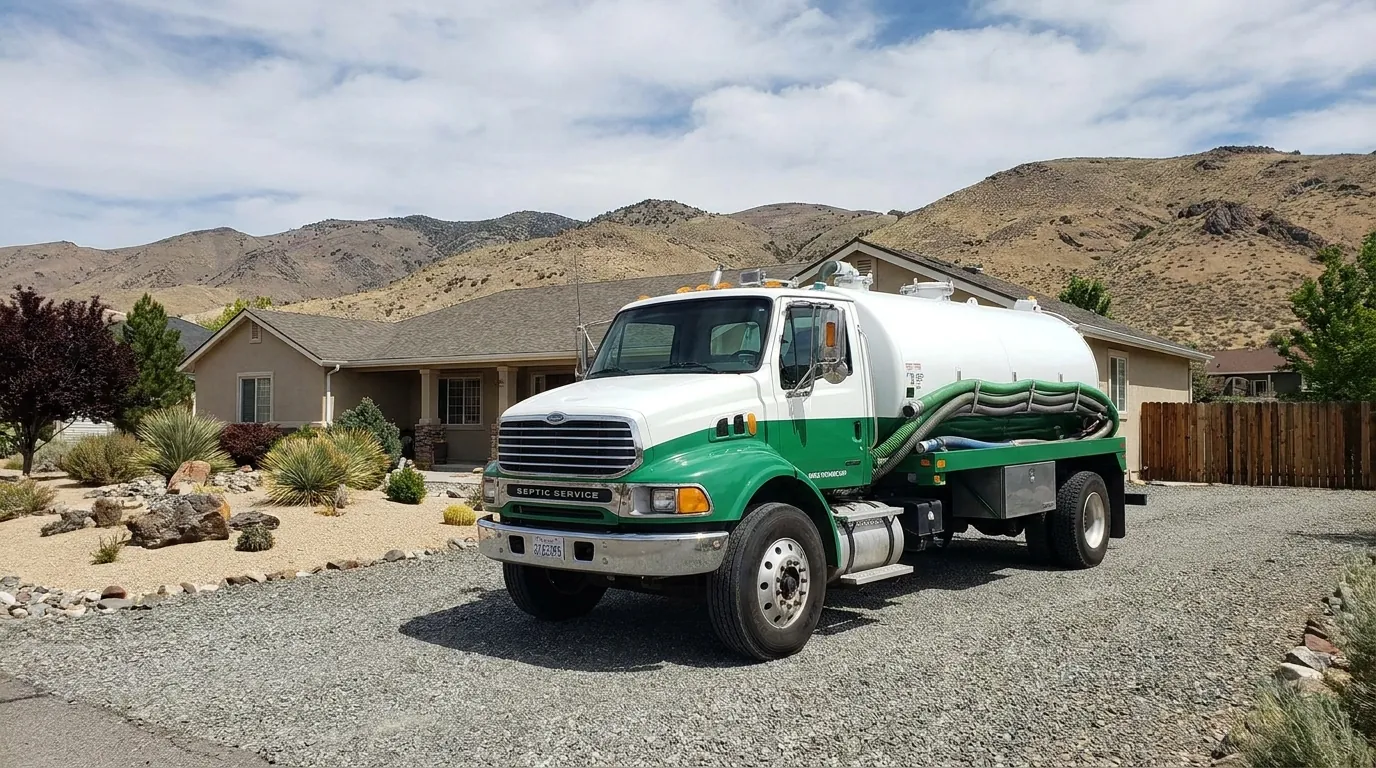
Serving Reno and the Truckee Meadows
Pumping, cleaning, inspection, and emergency septic help built around Reno's arid heat and desert soils.
Serving Reno, NV and the surrounding area.
If your home sits outside the reach of Reno's sewer lines — on an acre in Lemmon Valley, in the newer stretches of Spanish Springs, or on the hills around Incline Village — a septic system quietly handles everything that leaves your drains. It works well right up until it doesn't, and the warning signs are easy to miss until a tank backs up into a laundry room or a drain field turns soggy in the yard. This site is for the homeowner who wants to stay ahead of that, and who wants a straight explanation of what the work involves before booking it.
Reno Septic Pros focuses on the full septic cycle: routine septic tank pumping, thorough septic tank cleaning, condition septic system inspection, drain field service when effluent stops draining, grease trap pumping for kitchens, and septic emergency service when a system fails without warning. Every job is scheduled around what your specific system and soil actually need — not a one-size-fits-all interval.
The single biggest factor in how a septic system behaves here is the ground it sits in. Reno's arid heat, alkaline desert soils, and scarce rainfall change how fast a tank fills, how well a drain field percolates, and how a system recovers after a rare storm. A plan that makes sense in a wet climate can be wrong for the high desert. That's the thread running through everything below.
Septic systems depend on soil percolation and water-table depth — how quickly the ground can absorb treated effluent from the drain field. Around Reno those numbers swing sharply from one neighborhood to the next. Valley-floor lots in parts of Lemmon Valley can sit over shallow, poorly draining ground and even a seasonal water table, while properties up toward Spanish Springs and the foothills may have coarser, faster-draining soil. The same size tank on two different lots can need very different pumping schedules.
The arid climate cuts both ways. Long dry spells and alkaline soils mean drain fields here don't stay saturated the way they do in rainy regions, which is generally good for absorption. But scarce rainfall also means the bacterial breakdown inside the tank isn't diluted or flushed the way homeowners sometimes assume — solids build up steadily, and a tank that's never pumped will eventually push sludge into the drain field regardless of how dry it is outside. When Reno does get a heavy storm or rapid snowmelt off the Sierra, a drain field can flood quickly because the ground has no capacity to spare.
Because of all this, the right answer for your home comes from your tank and your lot, not a calendar rule copied from somewhere else. A septic system inspection that checks sludge depth and drain field behavior is the most reliable way to set a pumping interval you can trust — and to avoid paying for service you don't need or skipping service you do.
Six core services covering the whole septic system, from the tank to the drain field.
Scheduled removal of sludge and scum from the tank before solids reach the drain field. Frequency depends on tank size, household use, and local soil.
A look at tank levels, baffles, and drain field condition to catch small problems before they become repairs. Useful before a home sale or after a backup.
A deeper clean than a routine pump-out, removing hardened sludge and buildup from tank walls and outlets so the system runs the way it should.
Diagnosis and care when effluent stops soaking away — soggy ground, slow drains, or odors over the leach field. Reno's soils make this a common failure point.
Regular pumping of grease interceptors for restaurants and commercial kitchens to keep lines clear and stay ahead of blockages.
Response for backups, overflows, and sudden failures, when waiting for a routine appointment isn't an option.
Practical answers to the questions we hear most in Reno, NV.
A plain-language guide to what septic tank pumping costs in the Reno area, the factors that raise or lower the price, and how to avoid surprise fees.
How often Reno-area septic tanks need pumping, the household factors that speed things up, and how local soil and climate affect your schedule.
Learn the early and late warning signs that a Reno-area septic tank is full, what each symptom means, and when to call for pumping before a backup.
Most households land somewhere in the three-to-five-year range, but Reno's variable soils and household size can move that up or down. The reliable way to know is to have the sludge depth measured during an inspection rather than guessing.
Slow drains throughout the house, gurgling toilets, sewage odors near the tank or drain field, and unusually green or soggy grass over the leach field are common signs. If you notice several at once, it's worth booking service before a backup happens.
Not really. Dry weather helps the drain field absorb effluent, but solids still accumulate in the tank no matter how little it rains. Skipping pumping just because it's dry is a common way drain fields get damaged.
Yes. Along with Reno we work in Sparks, Lemmon Valley, Spanish Springs, Incline Village, Dayton, and Carson City. Each area has its own soil and terrain, which we factor into scheduling and service.
Stop adding water to the system, keep people and pets away from any surfacing sewage, and call for help. Our septic emergency service exists for exactly these situations, when waiting for a routine appointment isn't safe.
Tell us where you are and what you're seeing — slow drains, a due-for-service tank, or a full-blown backup — and we'll help you figure out the right next step.
Call using the number at the top of the page to reach us.
Septic service across Reno and the surrounding communities: