Drain Field Service in Reno, NV
Drain field service in Reno, NV. Recognize a failing leach field, understand the causes, and learn how desert soils affect drainage and your options.
What the drain field does and how it fails
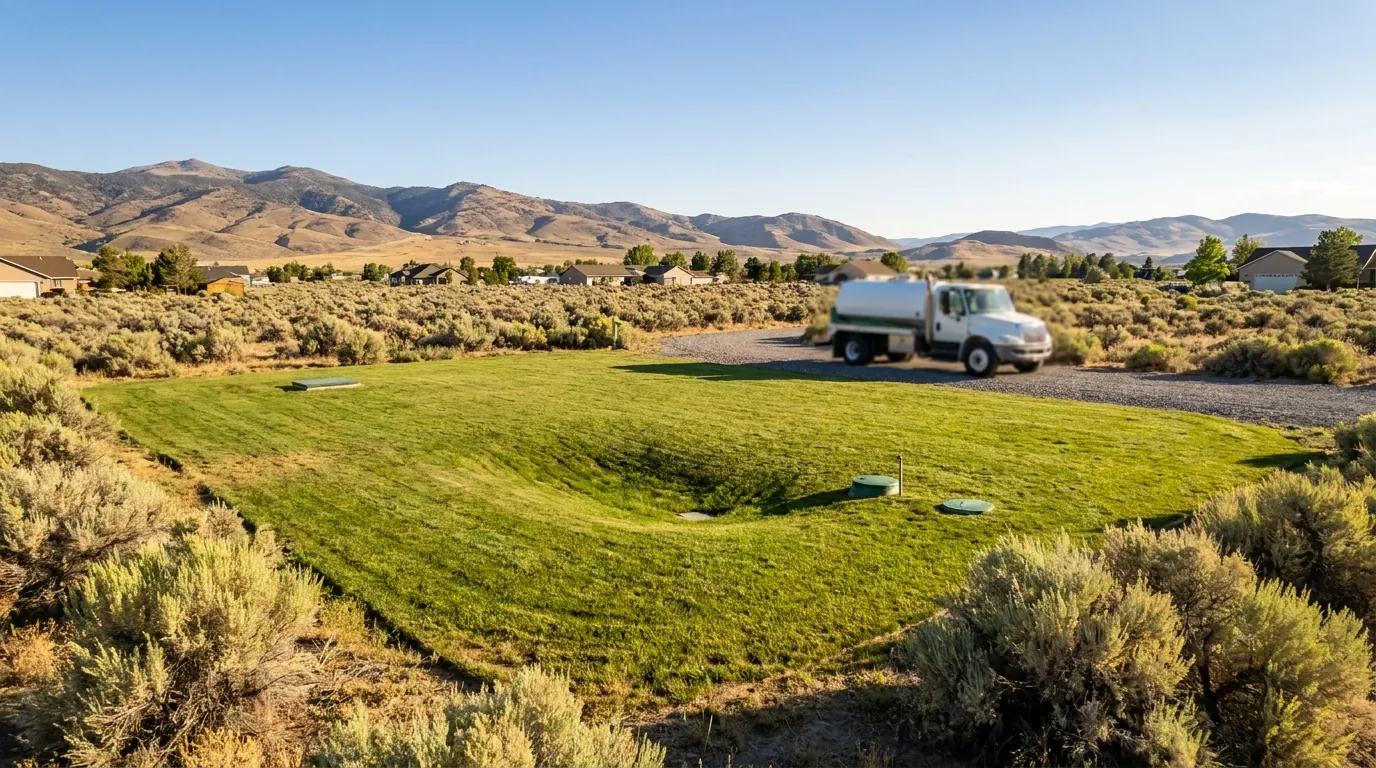
The drain field — also called the leach field — is where clarified liquid from the tank soaks into the soil and is filtered naturally. It is buried, silent, and easy to ignore until it stops working. When it fails, you cannot simply pump it out; a badly failed field usually has to be rested or replaced, which is the single most expensive event in a septic system's life.
The warning signs are worth learning: soggy or unusually green grass over the field, a sewage smell in the yard, effluent surfacing on the ground, slow drains throughout the house, or backups that return quickly after pumping. Most field failures trace back to solids that escaped a full or neglected tank and clogged the soil, or to chronic overloading. That is why regular septic tank pumping is the best protection a field can have.
If you suspect field trouble, a septic system inspection tells us whether the tank, the baffles, or the field itself is the source of the problem.
How we approach drain field problems
Drain field service starts with diagnosis, because the cure depends entirely on the cause.
-
Confirm the symptoms
We look at where water is surfacing, how the drains behave, and how recently the tank was serviced, to separate a field problem from a tank or baffle problem.
-
Check the tank first
A field that looks like it is failing is sometimes just downstream of an overfull tank or a broken outlet baffle. We rule those out before pointing at the field.
-
Evaluate saturation
We assess whether the soil is genuinely clogged and saturated or simply overloaded, which changes whether the field can recover with rest and reduced load.
-
Reduce the load
Pumping the tank and correcting water-use habits gives a stressed field the best chance to drain down and recover before more drastic steps are considered.
-
Plan next steps
We explain honestly whether the field can be nursed along or whether it is time to plan for professional restoration or replacement, so you can budget rather than be surprised.
Reno soils and your drain field
Drain field performance comes down to soil percolation and water-table depth, and Reno's conditions make this especially important. Alkaline desert soils frequently include clay and cemented hardpan layers that drain slowly. A field built into that kind of ground has less absorptive capacity than one in loose, sandy soil, so it is less forgiving of extra solids or overuse.
Arid heat and scarce rainfall keep the soil dry most of the year, which generally favors drainage. The risk comes when a rare heavy Sierra runoff or snowmelt saturates the ground while the field is already near its limit. A field that seemed fine all summer can surface effluent during a wet stretch. That is why we look at drain field condition in the context of the season and the household's real usage, not just a single dry-day snapshot.
The most reliable way to protect a drain field in this climate is to keep solids out of it — through consistent pumping and septic tank cleaning — and to keep water use steady rather than dumping large loads all at once.
Concerned about your drain field?
If the yard is soggy or drains are backing up, the sooner we diagnose it the more options you have.
Drain field diagnosis available throughout the Reno area.
Frequently asked questions
Can a clogged drain field be fixed?
Sometimes a stressed field recovers with pumping, reduced water use, and rest. A field that is fully clogged with solids often needs professional restoration or replacement, which is why early diagnosis matters.
What causes drain fields to fail here?
Most often it is solids escaping an overfull tank into the soil, chronic overloading, or slow-draining clay soil that saturates during wet spells. Regular pumping addresses the most common cause.
How do I know if it's the field and not the tank?
The symptoms overlap, so we check the tank and baffles first. An inspection sorts out whether the problem is upstream in the tank or in the field itself.
Does heavy rain affect my drain field?
It can. Reno's dry soil usually drains well, but a heavy runoff event can saturate the ground and overwhelm a field that is already near capacity.