Septic Tank Cleaning in Reno, NV
Septic tank cleaning in Reno, NV. Learn how cleaning differs from pumping, why it matters for desert soils, and the warning signs your tank needs attention.
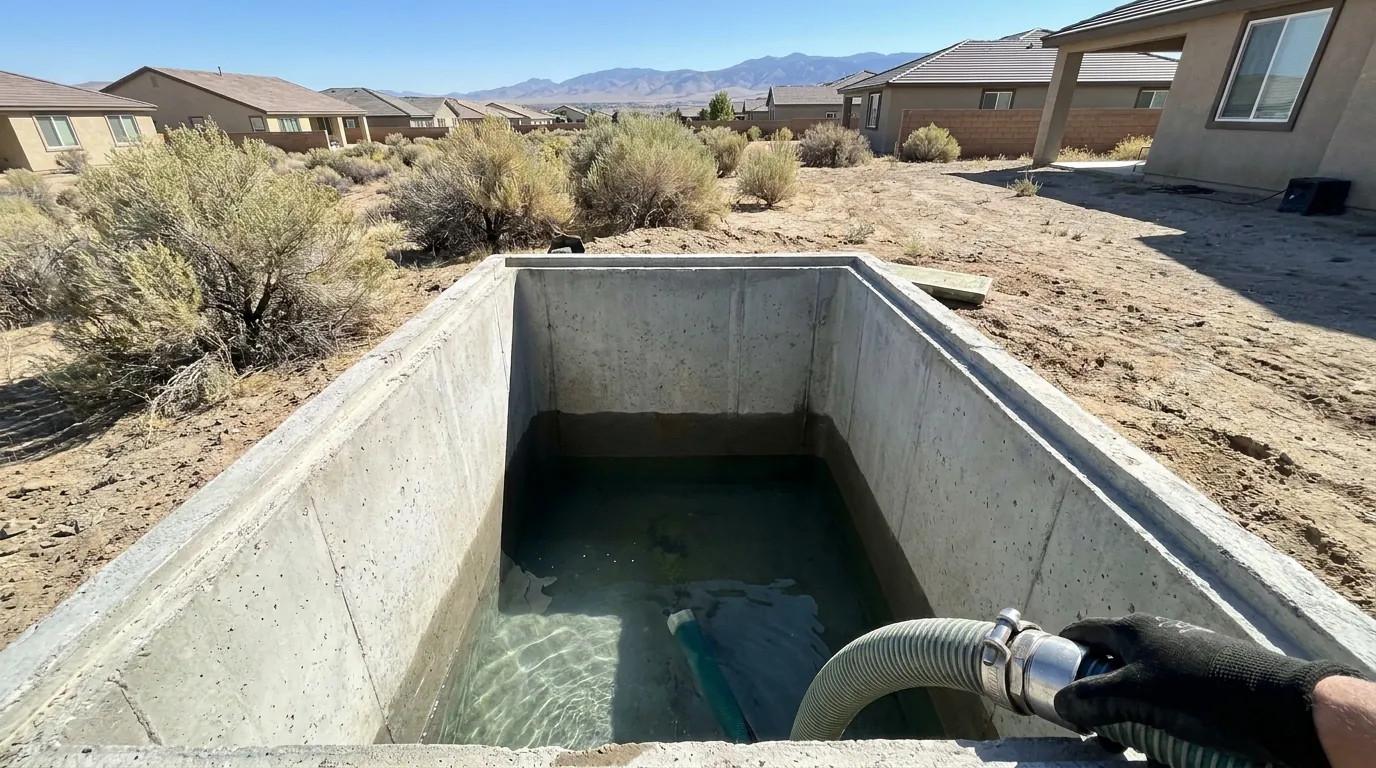
Cleaning a septic tank versus pumping it
People use pumping and cleaning interchangeably, but they are not the same job. Pumping removes the liquid and the sludge that pumps out easily. Cleaning a septic tank goes further: it removes the compacted sludge that settles and hardens at the bottom, along with the scum layer and any buildup clinging to the walls and baffles. Over years, that hardened bottom layer keeps growing even when a tank is pumped regularly, which is why periodic cleaning of the septic tank matters.
Signs that a tank needs cleaning rather than just a routine pump include recurring slow drains soon after a pumping, persistent odors, or an inspection that finds a thick, stubborn sludge layer. Cleaning the septic tank restores its full working volume, which is the buffer that keeps solids from escaping into the drain field.
Cleaning is usually done together with septic tank pumping, and a septic system inspection is the surest way to know whether a simple pump or a full clean is what your tank needs.
How we clean a septic tank
Cleaning starts the same way as pumping but does not stop at the easy material.
-
Empty the tank
We pump out the liquid, floating scum, and settled sludge so the tank interior is exposed and workable.
-
Break down compacted solids
Hardened sludge at the bottom often needs to be agitated or rinsed loose before it can be removed. This is the step a routine pump-out skips.
-
Clear the baffles and walls
We remove buildup around the inlet and outlet baffles and along the walls, where material accumulates and can restrict flow.
-
Check the effluent filter
If the tank has an effluent filter, we clean or replace it. A clogged filter is a common and easily missed cause of slow drains.
-
Inspect and reseal
With everything clear, we note the condition of the tank and baffles, then reseal the access lids.
Why cleaning matters in the Reno area
Septic systems here live or die by the drain field, and the drain field lives or dies by how well the tank keeps solids contained. In Reno's alkaline desert soils, which often include slow-draining clay and hardpan, a drain field that receives escaped solids clogs quickly and does not recover easily. A thoroughly cleaned tank is the cheapest insurance against that outcome.
Arid heat and scarce rainfall mean the biological activity inside a tank can behave differently than it would in a wetter, cooler climate, and low water use in some desert households lets solids sit and compact rather than stay suspended. That compaction is exactly what routine pumping leaves behind and cleaning removes.
If your tank is already showing signs of trouble at the field — soggy ground or surfacing effluent — cleaning alone may not be enough, and our drain field service should be part of the conversation.
Schedule septic tank cleaning
If it has been a long time between services, or a pump-out did not fix your slow drains, a full cleaning may be what your tank needs.
Serving Reno, Sparks, Spanish Springs, and nearby areas.
Frequently asked questions
Is septic tank cleaning the same as pumping?
No. Pumping removes liquid and loose sludge; cleaning also removes the compacted bottom layer and buildup on the baffles and walls that a standard pump leaves behind.
How often does a tank need a full cleaning?
Less often than routine pumping. Many systems need a thorough cleaning every several service cycles, but measured sludge levels are the real guide.
Will cleaning fix slow drains?
Often, if the cause is buildup in the tank or a clogged effluent filter. If the drain field is the problem, cleaning helps but may not be the whole fix.
Do additives replace cleaning?
No. Additives do not remove the compacted sludge that accumulates at the bottom of the tank. Physical cleaning is the only reliable way to restore full tank volume.