Septic Emergency Service in Reno, NV
Septic emergency service in Reno, NV. Backups, overflowing tanks, and surfacing sewage — what to do first and how a fast response limits the damage.
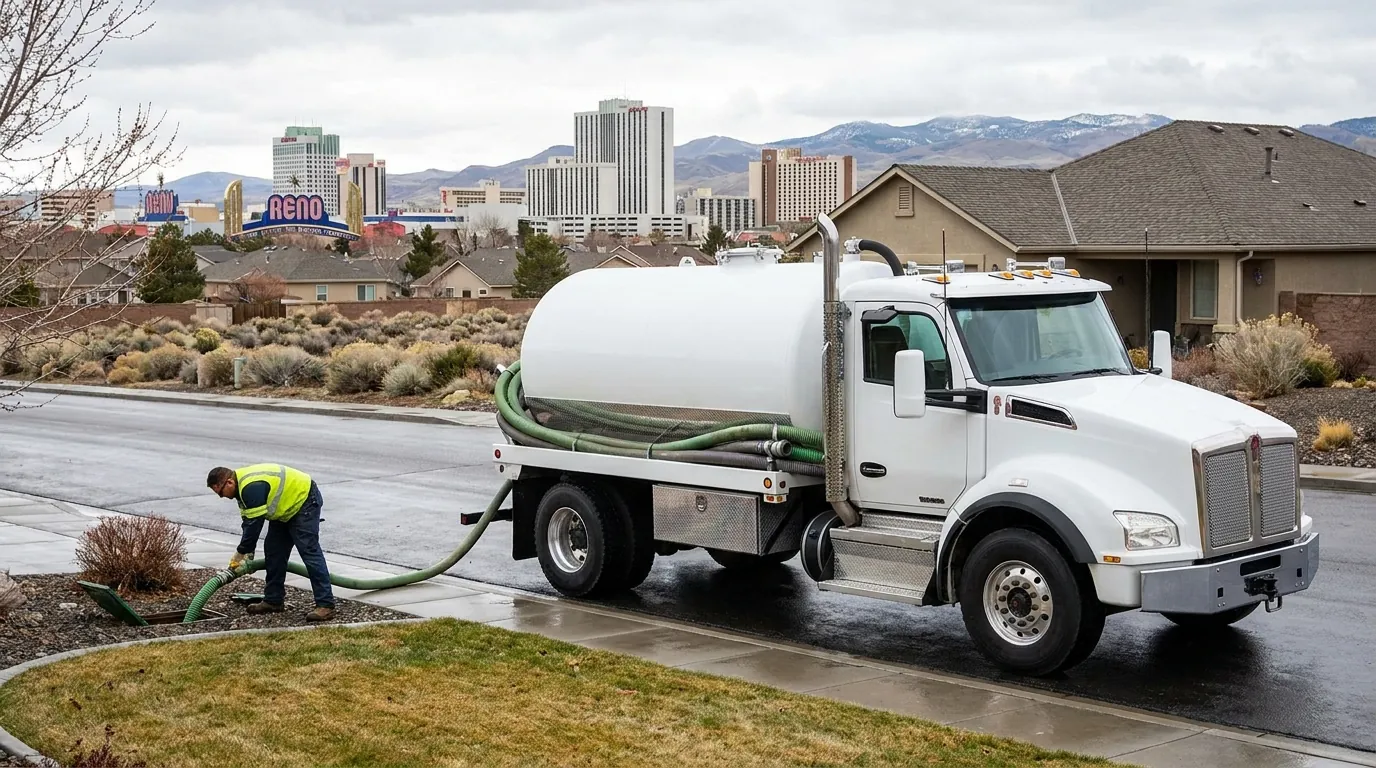
When a septic problem becomes an emergency
Some septic issues can wait a few days; others cannot. Sewage backing up into the house, a toilet or drain that will not clear anywhere in the home, wastewater surfacing in the yard, or a strong sewage smell that appears suddenly are all signals to act now. Standing sewage is a health hazard, and every hour it sits raises the risk to your flooring, fixtures, and drain field.
The most common cause of a septic emergency is a tank that has quietly filled past capacity, so solids and liquid have nowhere to go but back up the pipes. Other causes include a blocked outlet, a failed baffle, or a drain field that has stopped accepting effluent. Whatever the trigger, the first step is almost always to relieve pressure by pumping the tank, then to find out what let it get to that point.
While you wait for service, stop using water in the house to keep from adding to a backup. Once the immediate crisis is handled, a septic system inspection determines whether this was a one-off or a sign of a deeper problem in the tank or field.
How we handle a septic emergency
A response call is about stopping the damage first and diagnosing second.
-
Assess the situation
We ask what you are seeing — indoor backup, yard surfacing, or total drain failure — so we arrive ready with the right approach.
-
Relieve the pressure
In most cases we pump the tank right away to stop the backup and give the system room, which halts sewage from continuing to enter the home or yard.
-
Find the cause
With the tank drawn down, we look for the reason it overflowed — an overdue tank, a blocked outlet, a failed baffle, or a drain field that is no longer accepting flow.
-
Stabilize and advise
We get the system usable again where we can and explain clearly what needs to happen next, whether that is a repair or ongoing service.
Why Reno conditions raise the stakes
Reno's arid climate can hide a struggling system for a long time. Dry, receptive soil masks a drain field that is slowly losing capacity, so many households have no warning until a backup arrives. When a rare heavy runoff or snowmelt saturates the slow-draining alkaline soil, a marginal system that coped all summer can fail suddenly — which is why emergencies here often cluster around wet weather.
Fast action matters more in this environment because a drain field damaged by an overflow is hard to recover in clay and hardpan soils. Relieving the tank quickly with prompt septic tank pumping limits how much escaped material reaches the field. The best defense, though, is not to reach the emergency at all: consistent maintenance and periodic cleaning keep the buffer that prevents backups in the first place.
If you are seeing a backup right now, call and stop using water in the home until we arrive.
Have a septic emergency?
If sewage is backing up or surfacing, stop running water and call. The faster we relieve the tank, the less damage you face.
Emergency response across Reno, Sparks, and surrounding communities.
Frequently asked questions
What should I do first during a septic backup?
Stop using all water in the house immediately so you are not adding to the backup, keep people and pets away from any standing sewage, and call for service right away.
Will pumping fix an emergency backup?
Pumping usually stops the immediate backup by relieving pressure in the tank. Whether that fully resolves the problem depends on the underlying cause, which we diagnose once the tank is down.
Why do septic emergencies happen after rain?
Reno's dry soil hides a weakening drain field. A heavy runoff event can saturate the slow-draining ground and push a marginal system into failure, which is when many backups occur.
How can I avoid a septic emergency?
Stay on a sensible pumping schedule, watch for early warning signs like slow drains and odors, and get an inspection if anything seems off. Most emergencies follow long-overdue maintenance.