Septic System Inspection in Reno, NV
Septic system inspection in Reno, NV. Catch tank, baffle, and drain field problems early, and get a clear read on any septic system repair you may need.
Why septic inspections matter here
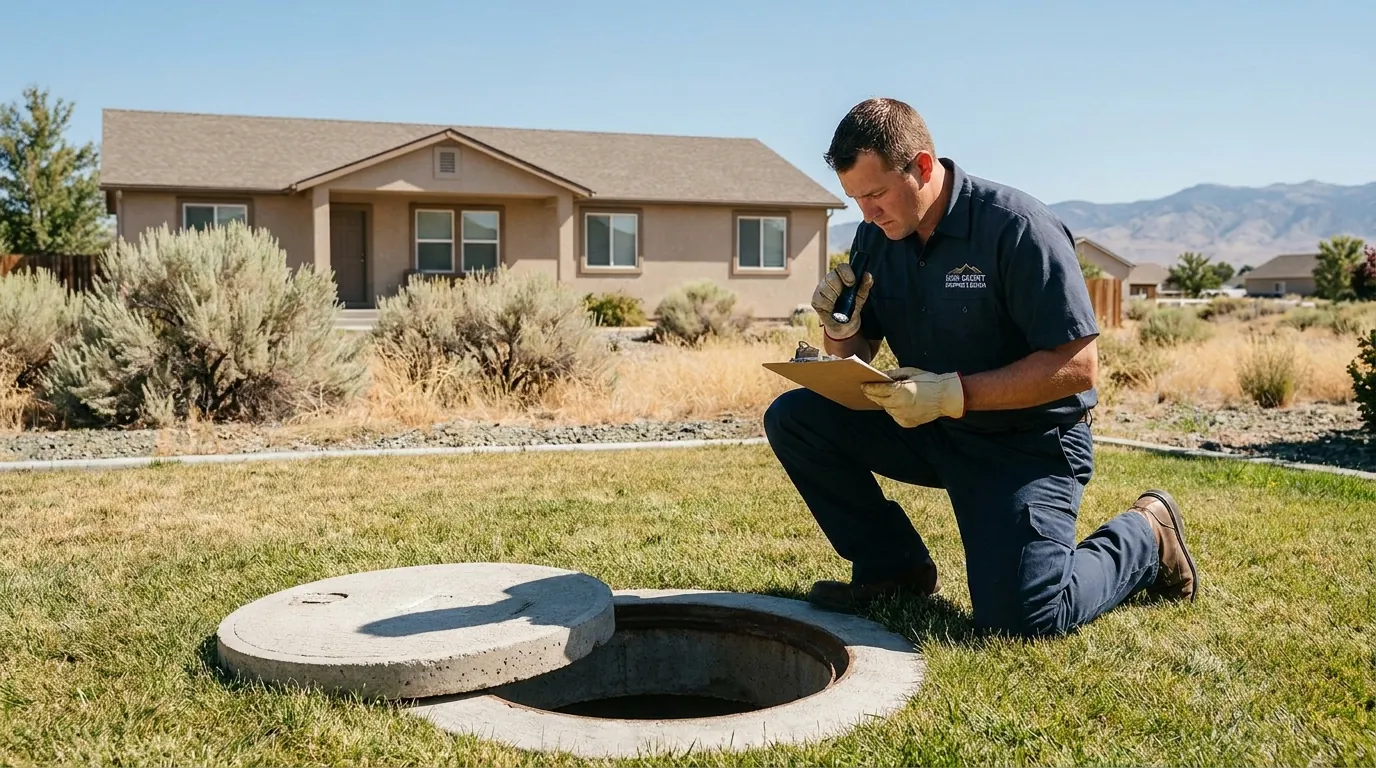
A septic system inspection tells you the real condition of the parts you cannot see. Tanks, baffles, and drain fields fail slowly and quietly, and by the time sewage is backing up or grass is going soggy, the cheapest window to act has usually passed. An inspection catches the warning signs early and gives you a clear picture of whether you are facing simple maintenance or a septic system repair.
People book inspections for a few reasons: buying or selling a home, a system that is behaving oddly, or simply wanting a baseline before committing to a pumping schedule. Warning signs that call for a closer look include slow drains throughout the house, sewage odors indoors or over the yard, wet or greener patches above the drain field, and gurgling fixtures. If you are seeing any of these alongside standing water, treat it as urgent and consider our septic emergency service.
Inspections pair naturally with septic tank pumping, because many components can only be judged accurately once the tank is drained and the interior is visible.
What an inspection covers
A full inspection works from the house out to the drain field.
-
System layout and records
We confirm tank location, size, and configuration, and review any available service history. Knowing what is buried and where prevents guesswork later.
-
Liquid level and flow
The liquid level in the tank tells a story on its own. A level that is too high can point to a drain field that is not accepting effluent; too low can mean a leak.
-
Baffles and filter
We check the inlet and outlet baffles and the effluent filter, if present. Damaged or missing baffles let solids escape toward the drain field, which is the most common cause of premature field failure.
-
Tank structure
We look for cracks, corrosion, and root intrusion in the tank walls and lids — problems that let groundwater in or effluent out.
-
Drain field check
We evaluate the drain field for signs of saturation, backup, or surfacing effluent, and note whether it is draining as it should. See our [drain field service](/services/drain-field-service/) if issues appear.
Reno conditions and what we look for
Septic performance depends on soil percolation and water-table depth, and around Reno those conditions are distinctive. Alkaline desert soils with clay or hardpan layers drain slowly, so a drain field here has less margin for error than one in loose, sandy ground. During an inspection we pay close attention to whether the field is keeping up with the household's output or slowly losing ground.
Arid heat and scarce rainfall usually keep the soil dry and receptive, which masks a struggling field. The trouble often shows up during a heavy runoff event, when already-slow soil saturates and a marginal system tips into failure. Spotting that vulnerability while the ground is dry gives you time to plan repairs rather than react to a backup.
We report findings in plain language: what is working, what is wearing out, and what needs attention now versus later. From there you can decide whether to schedule pumping, plan a repair, or set a monitoring interval.
Book a septic system inspection
Whether you are buying a home or just want to know where your system stands, an inspection gives you facts instead of guesses.
Inspections available across Reno and surrounding towns.
Frequently asked questions
When should I get a septic inspection?
Before buying or selling a home, when the system behaves oddly, or every few years as a baseline. An inspection is far cheaper than reacting to a failed drain field.
Does an inspection include pumping?
Not always, but the two often go together because many components can only be judged with the tank empty. We will tell you if pumping is needed to complete the inspection.
Can an inspection predict a septic system repair?
It can flag worn baffles, cracks, root intrusion, or a struggling drain field early, which lets you plan repairs on your schedule rather than during a backup.
How long does an inspection take?
A typical residential inspection takes a couple of hours depending on access and whether the tank needs to be uncovered and drained first.