Grease Trap Pumping in Reno, NV
Grease trap pumping in Reno, NV for restaurants and commercial kitchens. Learn the signs of a full trap, the pumping process, and why regular service matters.
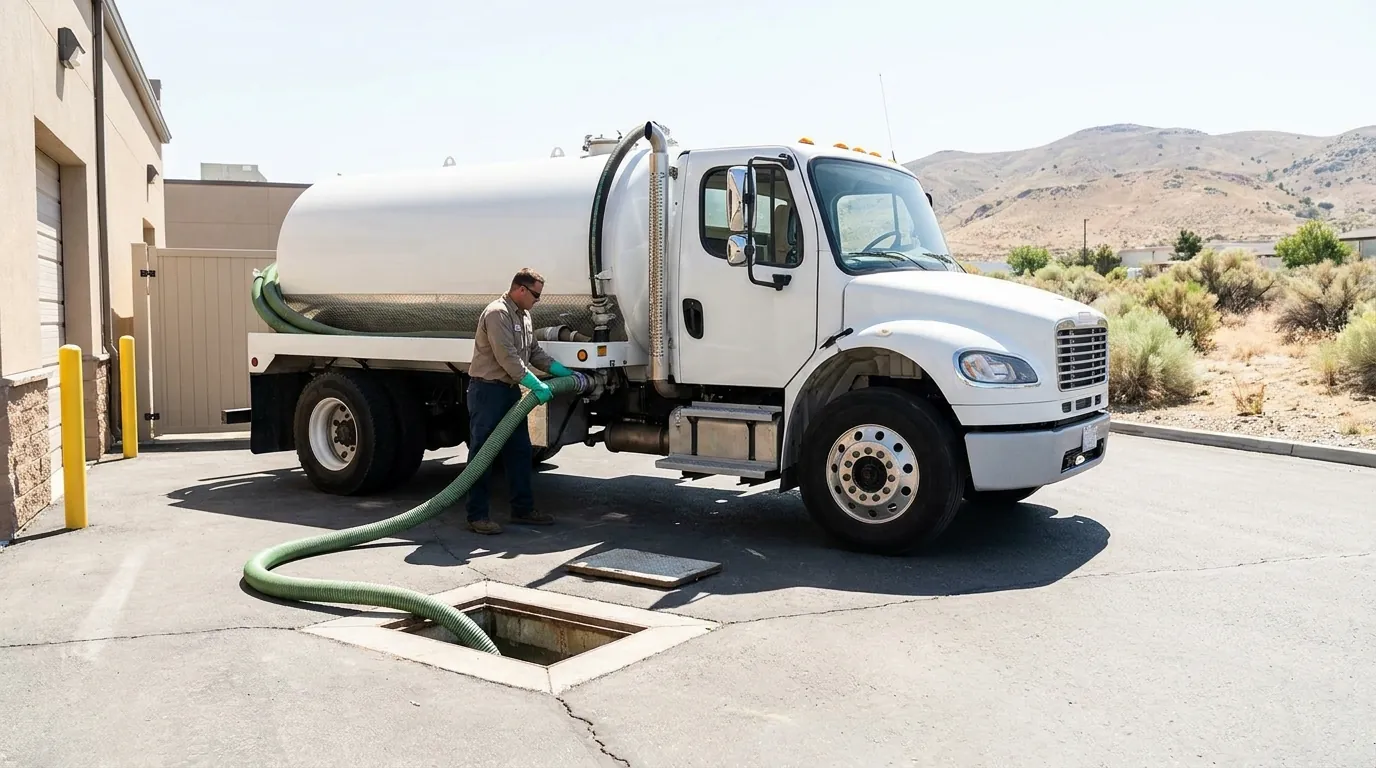
Why grease traps need regular pumping
A grease trap catches the fats, oils, and grease that kitchen wastewater carries, holding them back so they do not congeal in the pipes downstream or, for properties on septic, overwhelm the tank and drain field. Grease cools and hardens fast, and a trap that is not pumped on schedule stops holding it — sending grease into the plumbing where it builds up and blocks flow.
The signs a trap is overdue are hard to miss in a working kitchen: slow floor and sink drains, foul odors near the trap, grease appearing where it should not, and in bad cases backups during the busiest service of the day. For restaurants and commercial kitchens, an overflowing trap is not just a nuisance — it is a health and compliance problem that can shut down a line.
Grease trap pumping is a scheduled maintenance job, and the right interval depends on how much grease your kitchen produces. If a backup is already happening, our septic emergency service can respond.
What grease trap pumping involves
The process is quick when done on a regular schedule and messier when a trap is badly overdue.
-
Open the trap
We access the trap and remove the lid, checking the depth of the grease and solids layers to gauge how full it is and how well it has been draining.
-
Pump out the contents
We remove the accumulated grease, food solids, and wastewater completely, not just skimming the top layer, so the trap starts fresh.
-
Scrape and check
We clear hardened grease from the walls and baffles and inspect the trap for damage or missing parts that would let grease pass through.
-
Confirm flow
We check that inlet and outlet are clear and flowing before closing up, so the kitchen is ready to run.
-
Set a schedule
Based on how full the trap was, we recommend a service interval that keeps you ahead of backups and compliance issues.
Grease traps and septic in the Reno area
For a commercial property on a septic system rather than a sewer, the grease trap is doubly important. Any grease that slips past it heads straight for the septic tank, where it thickens the scum layer and can foul the outlet baffle. From there it threatens the drain field — and in Reno's slow-draining alkaline soils, a grease-fouled field is difficult and costly to recover. Keeping the trap serviced protects the whole system downstream.
Reno's arid heat also plays a role: warm conditions can accelerate how grease behaves and how odors develop around an under-serviced trap, especially through the summer. A consistent pumping schedule keeps that in check.
If your property runs both a grease trap and a septic system, it is worth coordinating trap service with septic tank pumping and a periodic septic system inspection so the entire chain stays healthy.
Set up grease trap service
Tell us about your kitchen's volume and we will help you land on a pumping schedule that keeps drains flowing and inspectors satisfied.
Commercial grease trap service across Reno and nearby towns.
Frequently asked questions
How often should a grease trap be pumped?
It depends entirely on how much grease your kitchen produces. Busy kitchens may need monthly service while lighter operations go longer; the fullness of the trap at each visit guides the schedule.
What happens if I skip grease trap pumping?
Grease escapes into the plumbing and, on septic properties, into the tank and drain field. That leads to blockages, backups, odors, and potential compliance problems.
Can enzymes replace pumping a grease trap?
No. Additives may reduce odor but do not remove the accumulated grease and solids. Physical pumping is the only way to empty the trap.
Does a full grease trap affect my septic system?
Yes. Grease that passes a neglected trap thickens the tank's scum layer and can reach the drain field, which is especially damaging in Reno's slow-draining soils.